ISOPOD FACTORY CSP-TAP-12 Cubaris Sp Tapir Panda King Clean Crew Sp. Isopods Bioactive Up
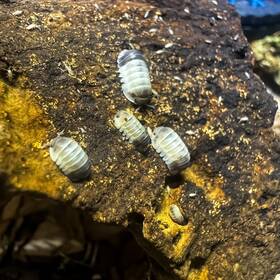
( Brand: Isopod Factory ), ( Manufacturer Part Number: CSP-TAP-12 ), ( Part Type: Crew ), ( Hold For Pick Up At Po Or Ups : Yes Live Arrival Guarantee ), ( Climate Type: Sub Tropical To Tropical ), ( Unit Type: Unit ), ( Country/region Of Manufacture: United States ), ( Unit Quantity: 12 Count ), ( Reproduction Rate: Average ), ( Species: Cubaris Sp. Tapir Panda King ), ( Care Level: Intermediate )
Review ISOPOD FACTORY Cubaris Sp. Tapir Panda King Isopods Bioactive Clean Up Crew
The **Isopod CSP-Tap-12 Cubaris Tapir Panda King Isopods** is a meticulously curated bioactive solution designed to elevate the health, aesthetics, and functionality of your freshwater or saltwater aquarium ecosystem. These **Cubaris tapir** isopods, often referred to as "Panda King" or "Tapir" varieties due to their distinctive, robust, and visually striking appearance, are a premium choice for hobbyists seeking a hardy, efficient, and visually appealing clean-up crew. Each package contains **12 fully mature isopods**, ensuring immediate contribution to your tank s biological balance. These isopods are known for their **large, elongated bodies** often reaching up to 1.5 inches in length with a **dark, almost black or deep brown exoskeleton** adorned with subtle, almost ghostly white or pale yellow markings along their segmented bodies, giving them a striking, almost alien-like aesthetic. Their **broad, flattened carapace** and **strong, curved antennae** make them well-adapted for navigating complex substrates, driftwood, and live plants, where they excel at scavenging decaying organic matter, uneaten food, and biofilm effectively acting as nature s vacuum cleaners.
Beyond their aesthetic appeal, these isopods are **exceptionally hardy and adaptable**, thriving in a wide range of water parameters, including temperatures between **72 F to 82 F (22 C to 28 C)** and pH levels from **6.5 to 8.0**, making them suitable for both freshwater and low-salinity brackish setups. Their **rapid reproduction rate** ensures a self-sustaining population, reducing the need for frequent replenishment while maintaining optimal bioactivity. The CSP-Tap-12 variety is particularly prized for its **aggressive scavenging habits**, as these isopods are known to consume **detritus, algae, and even small amounts of protein-rich waste**, including fish feces, without overgrazing live plants. Their **nocturnal nature** allows them to remain active during the day, contributing to a cleaner environment while blending seamlessly into the tank s decor.
For aquascapers and reef enthusiasts, these isopods serve as an **essential bioactive component**, promoting a healthier, more stable ecosystem by breaking down organic waste before it decomposes and releases harmful ammonia or nitrites. Their presence also **enhances the natural look of a tank**, as they move gracefully among rocks, wood, and plant roots, adding a dynamic, almost "living" quality to the environment. The **Cubaris tapir** isopods are also **low-maintenance**, requiring no special feeding beyond the organic detritus they naturally forage, though they may occasionally accept supplemental offerings like blanched vegetables or protein-rich foods if desired. Their **peaceful demeanor** ensures compatibility with most tank inhabitants, including shrimp, snails, and small fish, making them an ideal addition to community tanks.
Whether you re aiming to **reduce manual maintenance**, **enhance the biological filtration** of your aquarium, or simply **elevate its visual appeal**, the **Isopod CSP-Tap-12 Cubaris Tapir Panda King Isopods** deliver a **high-performance, visually striking, and ecologically beneficial** solution. Their **immediate impact** on tank cleanliness, combined with their **long-term reproductive success**, makes them a **smart investment** for both novice and experienced aquarists looking to create a thriving, self-sustaining aquatic ecosystem.
**Pros and Cons of buying a Isopod CSP-TAP-12 (Cubaris sp., Tapir Panda King Isopods) as a Bioactive Clean-Up Crew**
### **Pros**
1. **Highly Effective Clean-Up Crew** These isopods are known for their voracious appetite, consuming decaying plant matter, uneaten food, and organic waste efficiently. They help maintain water quality by reducing detritus and algae growth, which can be particularly beneficial in planted or bioactive tanks.
2. **Natural Bioactive Function** As part of a bioactive setup, they contribute to the natural decomposition process, breaking down organic waste into nutrients that benefit plants and microorganisms. This reduces the need for frequent water changes and manual cleaning.
3. **Low Maintenance** Unlike fish or more complex invertebrates, these isopods require minimal care. They do not need feeding (they scavenge for food), and their population can self-regulate based on available resources. They are also hardy and resistant to common tank issues like parasites or diseases.
4. **Aesthetic Appeal** Their unique appearance, with distinct coloration (e.g., the Tapir Panda King variety has a striking pattern), adds visual interest to the tank. They move slowly but deliberately, contributing to the natural ambiance of a bioactive environment.
5. **Compatibility with Most Tank Mates** They are generally peaceful and will not harm plants, snails, or other invertebrates. They can coexist with a wide range of fish species, though they may be preyed upon by aggressive or large fish (e.g., cichlids, larger catfish). Smaller, non-predatory fish (e.g., tetras, rasboras) and shrimp are usually safe.
6. **Breeding Potential** If conditions are ideal (proper humidity, hiding spots, and food sources), they can reproduce, allowing the population to grow naturally. This can be advantageous for maintaining a self-sustaining cleanup crew without frequent repurchasing.
7. **Versatility in Tank Types** They thrive in a variety of setups, including freshwater aquariums, paludariums, and terrariums. They are particularly useful in planted tanks, shrimp tanks, or bioactive systems where organic waste needs to be managed.
8. **Long Lifespan** Compared to some other invertebrates, these isopods have a relatively long lifespan (several months to over a year), providing consistent cleanup services over an extended period.
9. **Reduces Algae and Slime** By consuming biofilm and organic buildup on surfaces, they help prevent the accumulation of algae and slime, which can clog filters and degrade water quality.
10. **Educational Value** Observing their behavior and lifecycle can be fascinating for hobbyists, especially those interested in bioactive ecosystems or invertebrate care.
---
### **Cons**
1. **Risk of Overpopulation** If the tank has excessive organic waste or insufficient hiding spots, the isopod population can explode. While they are beneficial, an overabundance can lead to competition for food, stress, or even the need to cull the population to maintain balance.
2. **Potential for Escape** Isopods are excellent climbers and can escape through tight gaps, loose lids, or even small openings in the tank. They may also hitchhike on plants or decorations if not secured properly. This requires careful monitoring and secure containment.
3. **Sensitivity to Water Conditions** While hardy, they are sensitive to sudden changes in water parameters. Poor water quality (high ammonia, nitrites, or fluctuations in pH/temperature) can stress or kill them. Regular testing and maintenance are essential.
4. **Limited Role in Filtration** They do not replace mechanical or chemical filtration. While they help with organic waste, they cannot handle large amounts of waste or chemical pollutants (e.g., heavy metals, medications). A proper filtration system is still necessary.
5. **Not Suitable for All Tanks** They are not ideal for tanks with very low organic waste (e.g., pristine, heavily planted tanks with minimal detritus) or for systems where they would compete with other cleanup crews (e.g., snails or shrimp). They also may not thrive in tanks with very low humidity or poor substrate layers.
6. **Potential for Introducing Pests** If sourced from unreliable suppliers, there is a risk of introducing unwanted hitchhikers (e.g., mites, nematodes, or other invertebrates). Purchasing from reputable breeders or suppliers helps mitigate this risk.
7. **Time to Establish** It may take several weeks for the population to stabilize and become fully effective. During this period, manual cleaning may still be required to manage waste.
8. **Compatibility Issues with Some Tank Mates** While generally peaceful, they may be preyed upon by larger or aggressive fish, shrimp, or other invertebrates (e.g., certain species of shrimp or crabs). Researching tank mate compatibility is crucial.
9. **Substrate Dependency** They require a suitable substrate (e.g., leaf litter, wood, or bioactive layers) to hide and thrive. A bare-bottom tank or one with smooth surfaces may not provide enough hiding spots, leading to stress or escape attempts.
10. **Not a Complete Solution for Waste Management** They are part of a larger ecosystem. While they help, they should be used alongside other bioactive elements (e.g., snails, shrimp, plants, and beneficial bacteria) for optimal waste processing.
---
### **Conclusion**
The **Isopod CSP-TAP-12 (Cubaris sp., Tapir Panda King Isopods)** is an excellent choice for hobbyists looking to enhance their bioactive or planted tanks with a low-maintenance, efficient cleanup crew. Their ability to break down organic waste, improve water quality, and contribute to a natural ecosystem makes them a valuable addition. However, they require careful management to prevent overpopulation, escapes, and compatibility issues with other tank inhabitants. They are best suited for tanks with moderate to high organic waste, proper hiding spots, and stable water conditions.
For hobbyists prioritizing ease of use, aesthetic appeal, and natural filtration, these isopods are highly recommended. However, those with minimalist setups, aggressive tank mates, or poor water quality management may find them less ideal.
### **Recommendation**
If you are setting up a **bioactive, planted, or shrimp tank**, the **Cubaris sp. Tapir Panda King Isopods** are an outstanding addition. Start with a small group (e.g., 10 20 individuals) to gauge their impact and adjust as needed. Ensure your tank has:
- A **secure lid** to prevent escapes.
- **Hiding spots** (wood, caves, or leaf litter).
- **Stable water parameters** (pH 6.5 7.5, temperature 72 82 F, low ammonia/nitrites).
- **Compatibility with tank mates** (avoid aggressive or predatory species).
For those new to bioactive setups, they are a great way to learn about invertebrate care while improving tank health. Pair them with other cleanup crews (e.g., nerite snails, shrimp) for a balanced ecosystem. If your tank lacks organic waste or you prefer a cleaner environment, they may not be as beneficial. Always source them from reputable suppliers to avoid introducing unwanted pests.
Details:
Species Specific Disclosures for Cubaris Sp. Over counts are not replaceable and simply serve as a cushion for the amount you actually paid. Tapir Isopods are ideal for beginners or keepers with some experience working more common and less sensitive. Regular sunlight even in fair weather conditions can quickly raise temperatures inside of a box to deadly levels for Isopods short time period.
Panda King are as follows: The thickness of the black white sections vary from individual. Care Level: Intermediate. But it can and does vary slightly per individual. This is the only accepted source for temperatures.
Just a unique rare color morph that is missing the front black section. The most notable variations for Cubaris Sp. They will not fare well if allowed to get any level of dry. Your user ID should be written in a way that is legible and easy to discern.
While this endearing cubaris Isopod is not extremely difficult to keep, it still does require a bit more care than most common Isopods like Immortality or Purcell types. Tapir Panda King, The pictures in this listing show only a few specimens that represent the most accurate average visual traits. Isopods are Stradivarius. Packages left outside exposed to the elements significantly elevates risk factor.
Tapir do not need a pronounced moisture gradient like most other Isopods. But to picture every single difference in a given Isopod type is unrealistic and virtually impossible since the amount of small differences can be quite variable. Tapir enjoy food options like squash, carrots, zucchini and other veggies along with commercial Isopod powdered Rep ashy Morning wood. Both of these should always be available in abundance.
With some species the very young ones can be quite small and easy to miss. They tend to stay clustered under cork bark and burrow in the substrate. The best time to observe them is at night when they are naturally active and foraging for food. Exceptionally larger orders may require more time to prep.
Other things like carrier or package theft also become a concern with door delivery. Their primary diet in nature is. This mimics their natural cave environments and they do seem to enjoy it. Standard or bioactive enclosures can be enhanced with natural botanical items to simulate the Isopods habitat in wild.
They tend to scatter when disturbed and quickly hide. A large adult is likely already at least half aged. Depending on the color of pods, they also might blend in and be very well camouflaged. Packages can sometimes sit on a hot or cold delivery vehicle all day before they get to your door step.
Please understand these items are useful for modestly chilly or warm weather, but they not enough extreme frigid cold blazing hot mid summer temperatures. This listing is for 12 Cubaris Sp. A small gradient is fine, but a consistent lightly damp not wet enclosure ideal. A good temperature range is 72-80F leaning more towards the warmer end if possible.
Rolls into a ball when disturbed. The shipping process is very stressful for the Isopods imagine it from their perspective, so less time they spend in complete darkness getting tossed around, better all involved. Activity: Primarily nocturnal. Why is all of this necessary for LAG coverage.
Every parcel is packed with care and all precautions taken to give your pods the best chance of making journey alive well. This helps them feel secure which in turn promotes their natural processes like eating and breeding. It does however serve as a valuable reinforcement should there be any questionable aspects of the photos you provide outlined above. We'll contact you to advise if needed.
They are not manufactured cloned merchandise. Standard or bioactive enclosures can be enhanced with to simulate the Isopods habitat in wild. Classification: Amplitude > Cubaris Sp. Packing live animals is an involved process and takes time.
Tapir Panda King Isopods. Just like all other living creatures, the same species and/or color morph of any Isopod will have some amount variation between individuals. We must be able to easily and accurately verify the DOA count is as stated. This can be in the form of crushed pellet's they nibble or small light weight stones crawl on and hide under.
Some daytime activity is normal with large cultures. It is important to understand you are buying living things. As with most any other Cubaris Isopod, it is recommended to have some limestone in their enclosure. They're burrowers so do not expect to see them out and about during the day very much.
A 75% humidity level without large deviations will give you fantastic results. Their primary diet in nature is leaf litter and decayed wood. They also tend to be protein hungry so offer them things like freeze dried minnows, shrimp, fish pellet's, insects and other based food sources. Sizes will vary.
Origin: Various Parts of Thailand and Vietnam. Characteristics: Color morph of the common Panda King. As such it is vital to supplement your Isopods with other food sources on a semi regular basis. Tapir is technically a Panda King.
Be sure to feed these on the drier side as they can spoil quickly in humid environments and attract unwanted pests. They do retain their cute black faces, but that aside they are the same exact Isopod with care needs as traditional Panda King and its many other variants. They will also happily consume any other decomposing organic plant or animal matter they come across. It is the safest and smartest way to receive your pods.
Average room temperature will suit them just fine but keep in mind they are native to tropical sub areas so do not let it get too cool. A 6 quart gasket sealed storage bin or small glass aquarium is sufficient for a starter culture.
part #: csptap12 price
- $79.95
specifications reptsuppl:
- brand: Isopod Factory
- mpn: Csp-tap-12
- part type: Crew
- hold for pick up at po or ups : Yes Live Arrival Guarantee
- climate type: Sub Tropical To Tropical
- unit type: Unit
- country/region of manufacture: United States
- unit quantity: 12 Count
- reproduction rate: Average
- species: Cubaris Sp. Tapir Panda King
- care level: Intermediate
general reptsuppl:
- Pet Supplies > Reptile Supplies
- condition: New
payments reptsuppl:
- wallet: Apple-pay
- credit card: Mastercard
- other
shipping reptsuppl:
- service: Standard, Expedited, Overnight
- cost: $0.00
- transit: 10-16 Days
- type: Fixed
- class: Standard, Expedited, One-day
returns reptsuppl:
- policy: No Returns
offer reptsuppl:
- quantity: 2
- availability: In Stock
- sold: 0
- options: Ship-to-home
- started: May 20, 2026
seller reptsuppl:
- city: Dayton, Ohio
- # reviews: 516
- rating: 99.1%
Isopod Factory CSP-TAP-12 Is Similar To:
- Unbranded Giant Spanish Isopods Porcellio Magnificus Isopod (32.4% similar) Keep them in a setup with moisture gradient drying on one side, damper the other and feed fish flakes, oak leaves, fruit veggie scraps. Purcell magnifies is one of the largest Isopod species in world, reaching a maximum length...(November 24th, 2018)
- Isopod Factory Llc Aklu-mon-or-24 24 Armadillidium Klugii Orange Montenegro Isopods Bioactive (46.2% similar) Be sure to feed these on the drier side as they can spoil quickly in humid environments and attract unwanted pests. Regular sunlight even in fair weather conditions can quickly raise temperatures to deadly levels inside of the box. Morph/locality type: Montenegro. They will also happily consume any ...(September 15th, 2024)
- Isopod Factory Llc Anas-p-50 50 Armadillidium Nasatum Peach Nosy Isopods Bioactive Clean Up (60% similar) Average room temperature in the low to mid 70SF will suit them just fine. Immortality nas tum is a relatively outgoing Isopod that can be seen exploring and moving about their enclosure at various times. As such it is vital to supplement your Isopods with other food sources on a semi regular basis. ...(September 27th, 2024)
- Isopod Factory Llc Apall-o-12 12 Armadillidium Pallasii Orange Isopods Bioactive Clean Up Crew (72.1% similar) They enjoy food options like squash, radishes, carrots and other veggies along with commercial Isopod powdered rep ashy. A standard moisture gradient is fine so long as the dry side still has at least a nominal amount of to it. This helps them feel secure which in turn promotes their natural ...(October 2nd, 2024)
- Isopod Factory Llc Agran100 100 Armadillidium Granulatum Isopods Bioactive Clean Up Crew (61% similar) Be sure to feed these on the drier side as they can spoil quickly in humid environments and attract unwanted pests. Standard or bioactive enclosures can be enhanced with natural botanical items to simulate the Isopods habitat in wild. Please also note as with most immortality, this species may tend ...(October 7th, 2024)
- Isopod Factory Llc Avul-pc-50 50 Armadillidium Vulgare Punta Cana Isopods Bioactive Clean Up (57.5% similar) This helps them feel secure which in turn promotes their natural processes like eating and breeding. Individuals can also have splotching, stripes or speckles. Immortality vulgarer is a relatively outgoing Isopod that can be seen exploring and moving about their enclosure at various times both day ...(October 9th, 2024)
- Isopod Factory Llc Csp-rd-10 10 Cubaris Sp Rubber Ducky Isopods Bioactive Clean Up Crew (79.1% similar) First, a large reality check for anyone who needs it. There is a wealth of information out there about how to care for these Isopods and get the best results. Regular sunlight even in fair weather conditions can quickly raise temperatures to deadly levels inside of the box. They will also happily ...(October 10th, 2024)
- Isopod Factory Llc Po-wb-20 20 Porcellio Ornatus Witchs Brew Isopods Clean Up Crew (49.1% similar) Origin: Spain. This can create challenges with keeping the moist area from drying out. A 5-10 glass tank or 12QT gasket sealed sterility bin is fine for a starter colony of 12-20 individuals. This flashy Isopod will eat all of the typical food options like various vegetables, powdered diets rep ashy...(October 10th, 2024)
- Isopod Factory Llc Csp-pk-100 100 Cubaris Sp Panda King Isopods Bioactive Clean Up Crew (89.3% similar) This helps them feel secure which in turn promotes their natural processes like eating and breeding. This listing is for 50 panda king Isopods. A 6 quart gasket sealed storage bin or small glass aquarium is sufficient for a starter culture. The white is typically off white, but still bright enough ...(October 11th, 2024)
- Isopod Factory Llc Cubmar-anem-50 50 Cubaris Murina Anemone Isopods Bioactive Clean Up Crew (66.7% similar) A 75% humidity level without large deviations will give you fantastic results. In addition to the anemone morph seen here, there are many other color morphs available ranging from grey, pink, white, orange and a few others as well. Regular sunlight even in fair weather conditions can quickly raise ...(October 11th, 2024)
- Isopod Factory Llc Cubmar-anem-30 30 Cubaris Murina Anemone Isopods Bioactive Clean Up Crew (66.7% similar) A 6 quart gasket sealed storage bin or small glass aquarium is sufficient for a starter culture. This mimics their natural cave environments and they do seem to enjoy it. Starter and smaller cultures are somewhat reclusive, but they noticeable more bold in higher numbers. Activity level: varies by ...(October 11th, 2024)